Supporting Non-Verbal Children and Adults with Visual Communication Tags
Communication is a fundamental human need. However, for non-verbal children and adults, expressing needs, emotions, and preferences can be challenging. Visual communication tags offer a simple, structured and portable way to support understanding and independence.
Importantly, these tools are not just for children. They can be equally valuable for teenagers and adults who use alternative communication methods.
Why Visual Communication Matters
Non-verbal individuals may communicate using gestures, AAC devices, facial expressions or behaviour. However, in busy or stressful environments, communication can break down.
Visual communication tags help by:
-
Providing clear, consistent visual cues
-
Reducing frustration caused by misunderstanding
-
Supporting emotional regulation
-
Encouraging independence
-
Offering a portable communication tool
Because the tags are physical and durable, they can travel between home, school, work or community settings.
How Visual Communication Tags Support Daily Life
Visual tags can be used in several practical ways.
1. Expressing Basic Needs
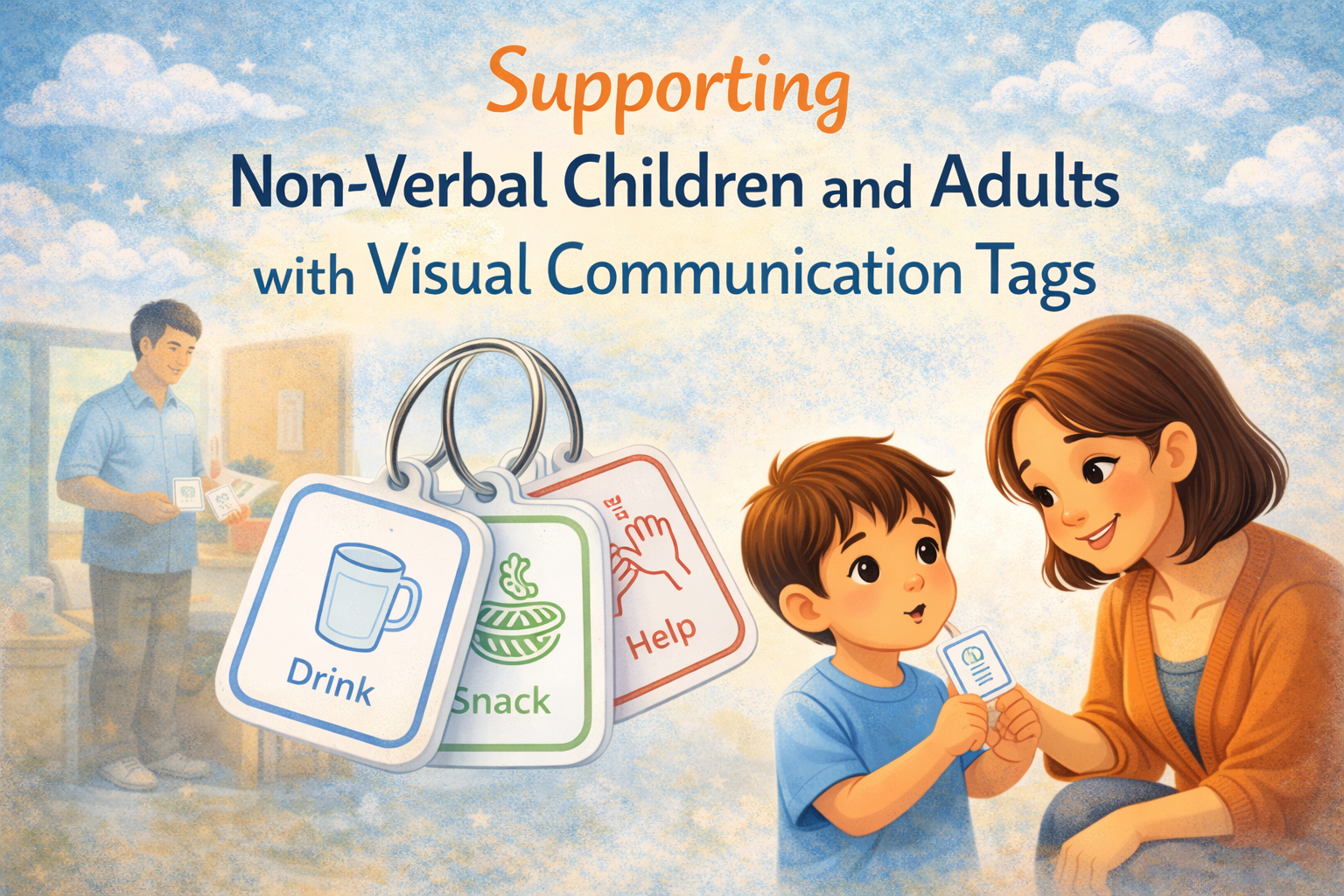
Tags such as “Drink,” “Snack,” “Toilet,” or “Help” provide immediate clarity. Instead of escalating behaviour, the individual can simply show the tag.
👉 Explore our Basic Needs Communication Tag Set for everyday support.
2. Supporting Emotional Regulation
Some individuals struggle to explain how they feel. Regulation-focused tags such as “Break,” “Quiet,” or temperature-based cues like “Too Hot” or “Too Cold” help communicate discomfort before distress escalates.
👉 Discover our Communication & Regulation Tags designed to support self-advocacy and sensory needs.
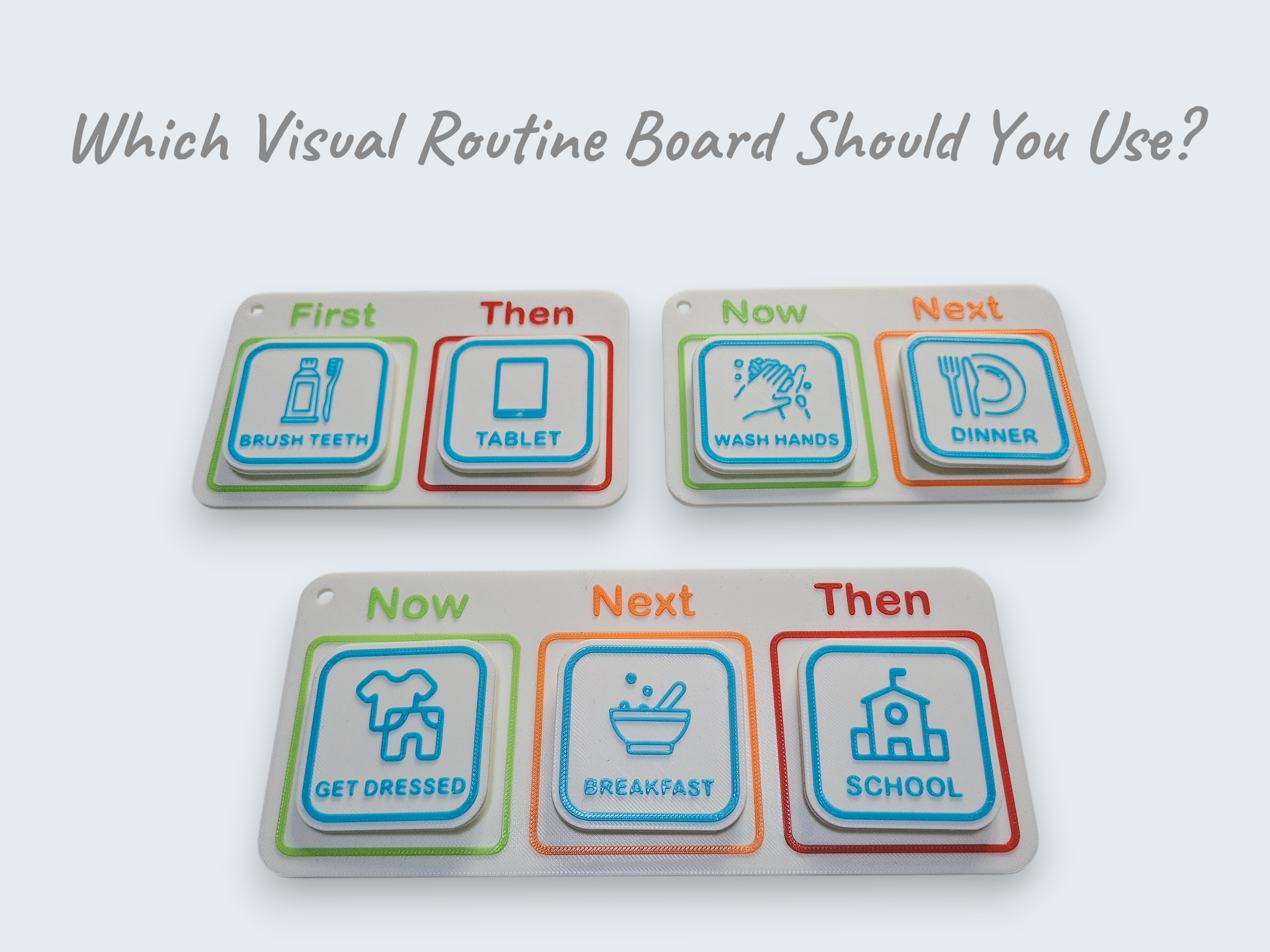
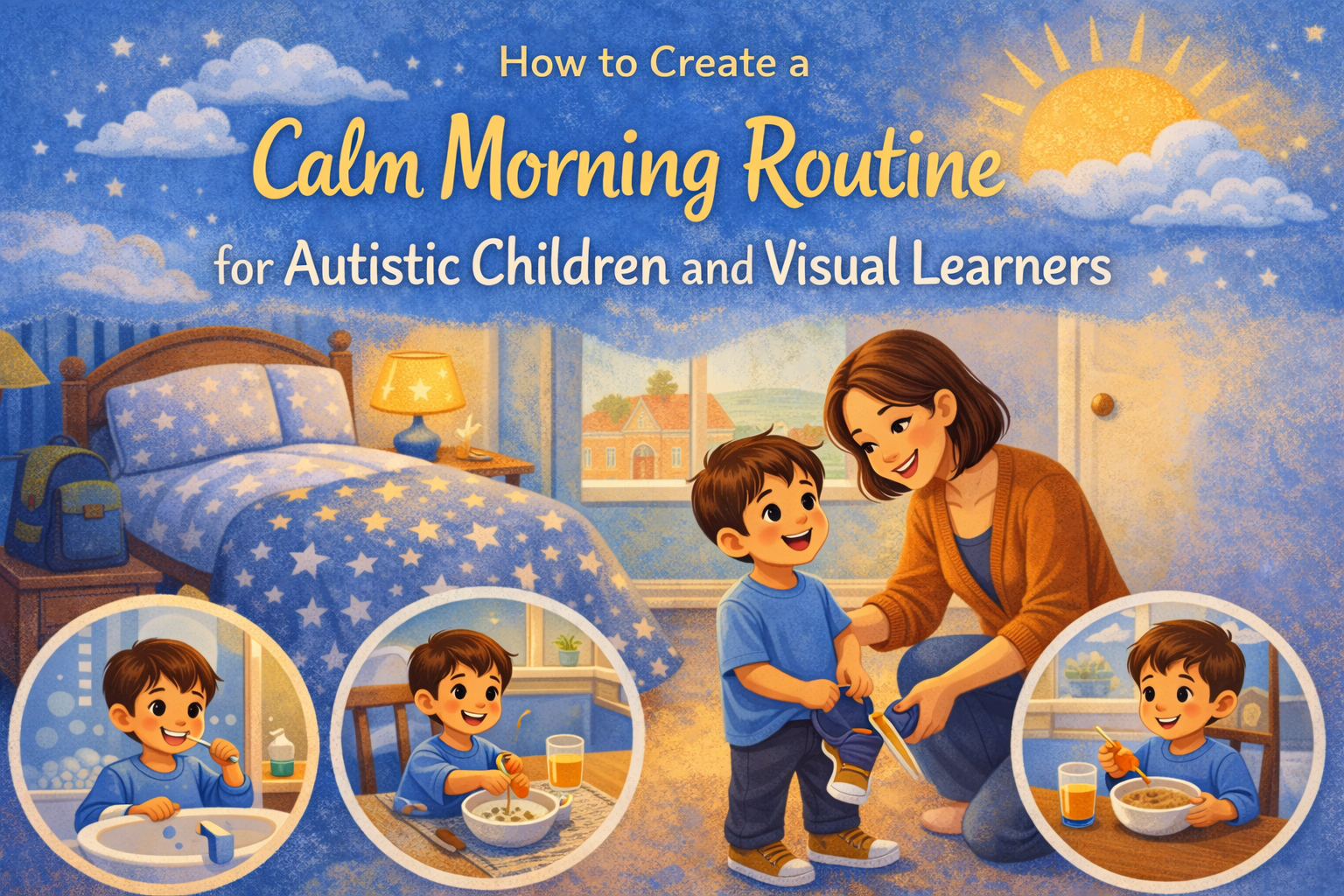
3. Creating Predictable Routines
Routine reduces anxiety. When expectations are visible and consistent, transitions become easier.
Our:
help create structured daily flow while supporting independence.
In addition, structured routines benefit both children and adults who thrive on predictability.
Supporting Non-Verbal Adults
It is important to recognise that visual supports are not age-restricted. Many non-verbal adults benefit from simple, durable and discreet communication tools.
Visual communication tags can:
-
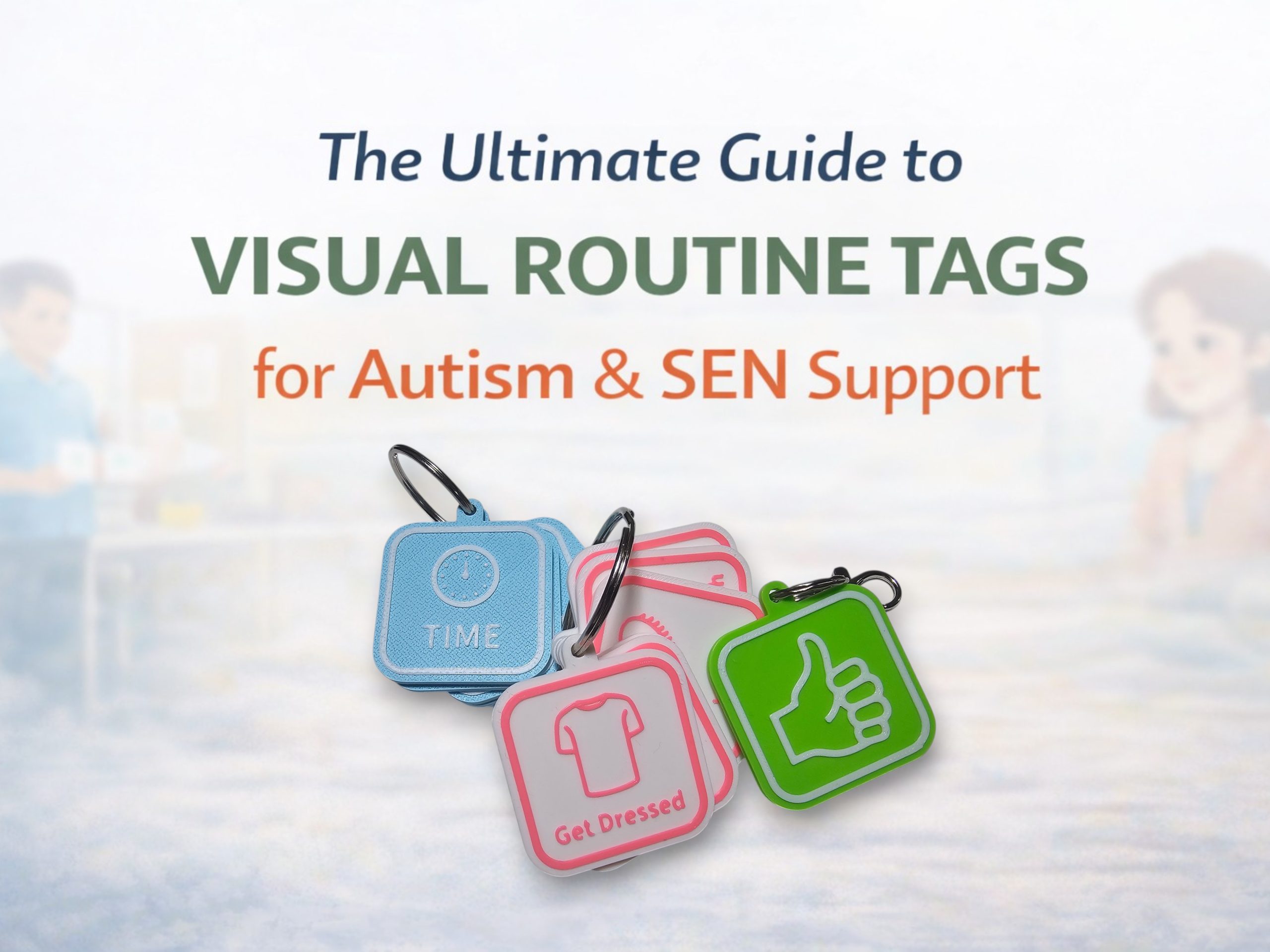
Be attached to keyrings or lanyards
-
Be used in supported living environments
-
Support workplace understanding
-
Help reduce reliance on others to interpret needs
Furthermore, portable tags provide dignity and autonomy. Instead of waiting for someone to guess, individuals can communicate clearly and confidently.
Why Portable Visual Supports Are So Effective
Unlike wall charts or paper schedules, tag-based systems are:
-
Portable
-
Durable
-
Discreet
-
Customisable
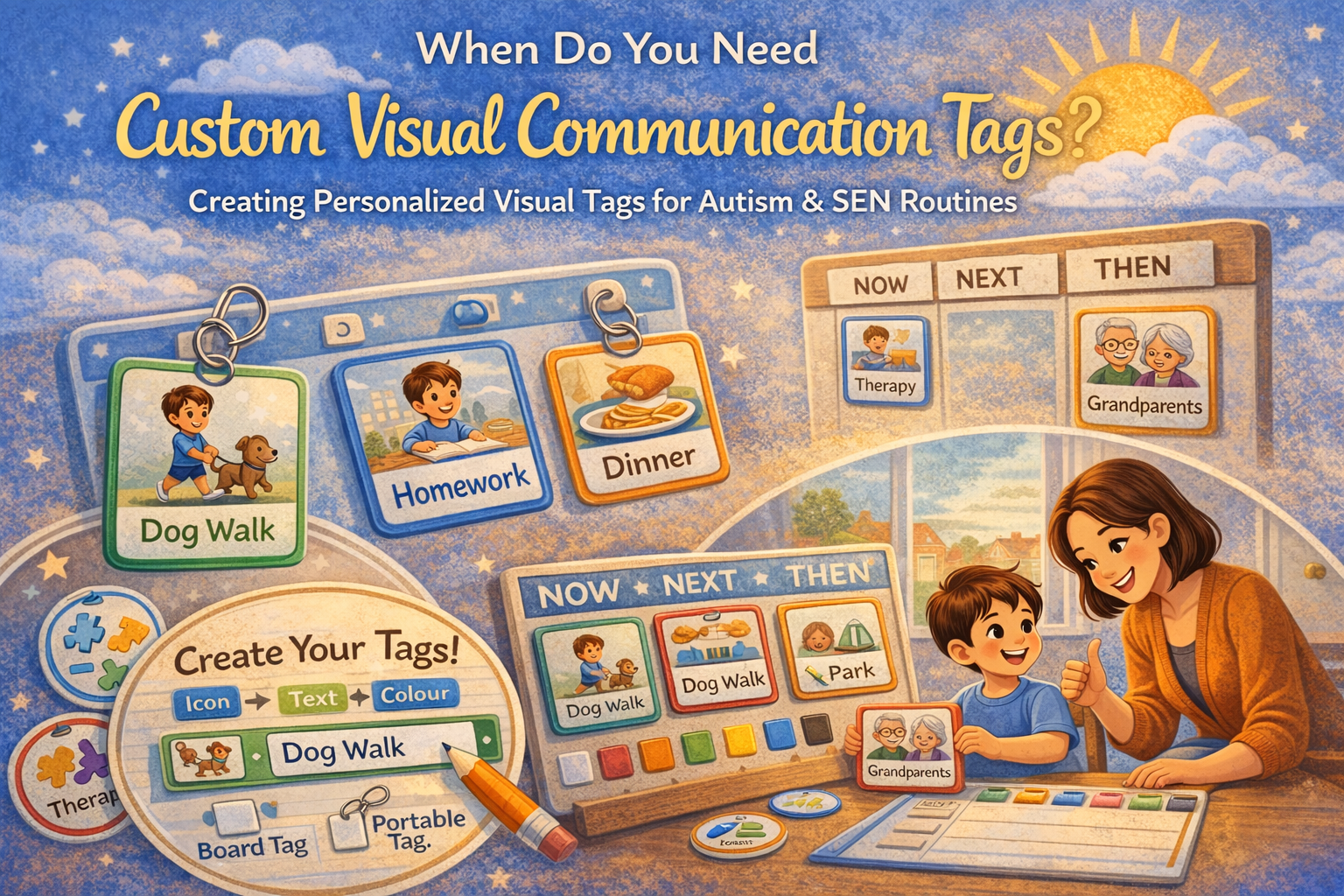
Because icon and border colours are customisable, tags can be adapted to sensory preferences or colour-coding systems.
As a result, they work across home, education and adult support settings.
Encouraging Independence Through Visual Communication
Independence builds confidence. When individuals can express needs without relying entirely on others, frustration reduces and self-esteem improves.
Visual communication tags are not about replacing other methods. Instead, they act as a supportive bridge between understanding and expression.
Over time, this consistency can reduce anxiety, prevent meltdowns and create calmer daily environments.
Final Thoughts
Supporting non-verbal children and adults requires flexible, respectful tools. Visual communication tags provide clarity, predictability and empowerment in a simple, accessible format.
Whether used for basic needs, emotional regulation or structured routines, these tools promote dignity and independence at every age.