Visual routine tags are simple tools with powerful impact. For autistic individuals and those with additional needs, predictable structure reduces anxiety, supports communication and encourages independence.
In this ultimate guide, we explain what visual routine tags are, how they work and how to use them effectively at home, school and in the community.
What Are Visual Routine Tags?
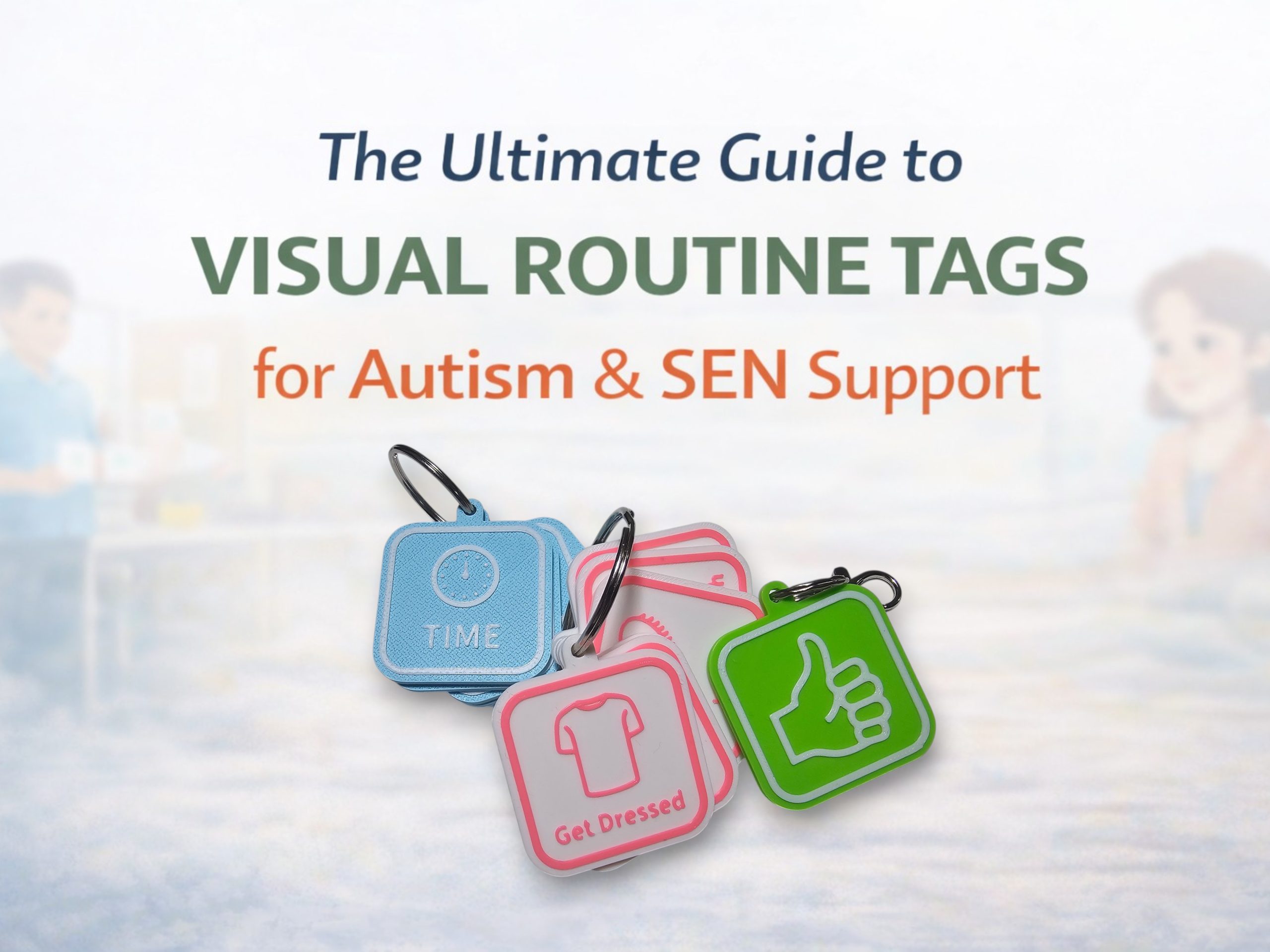
Visual routine tags are durable, portable visual cues that represent daily activities or needs. Unlike wall charts or printed schedules, tag-based systems can travel with the individual.
Each tag typically includes:
Because they are physical and tactile, they are easy to access in real time.
Why Visual Routines Work
Many autistic individuals and people with SEN thrive on predictability. Uncertainty can increase anxiety, which may lead to frustration or behavioural distress.
Visual routine tags help by:
In addition, they reduce reliance on repeated verbal reminders.
Who Can Benefit from Visual Routine Tags?
Visual supports are not age-restricted.
They are helpful for:
Because routines provide structure, they benefit both children and adults who prefer clear expectations.
Types of Visual Routine Tags
To create a structured system, routine tags can be grouped into categories.
1️⃣ Morning Routine Tags
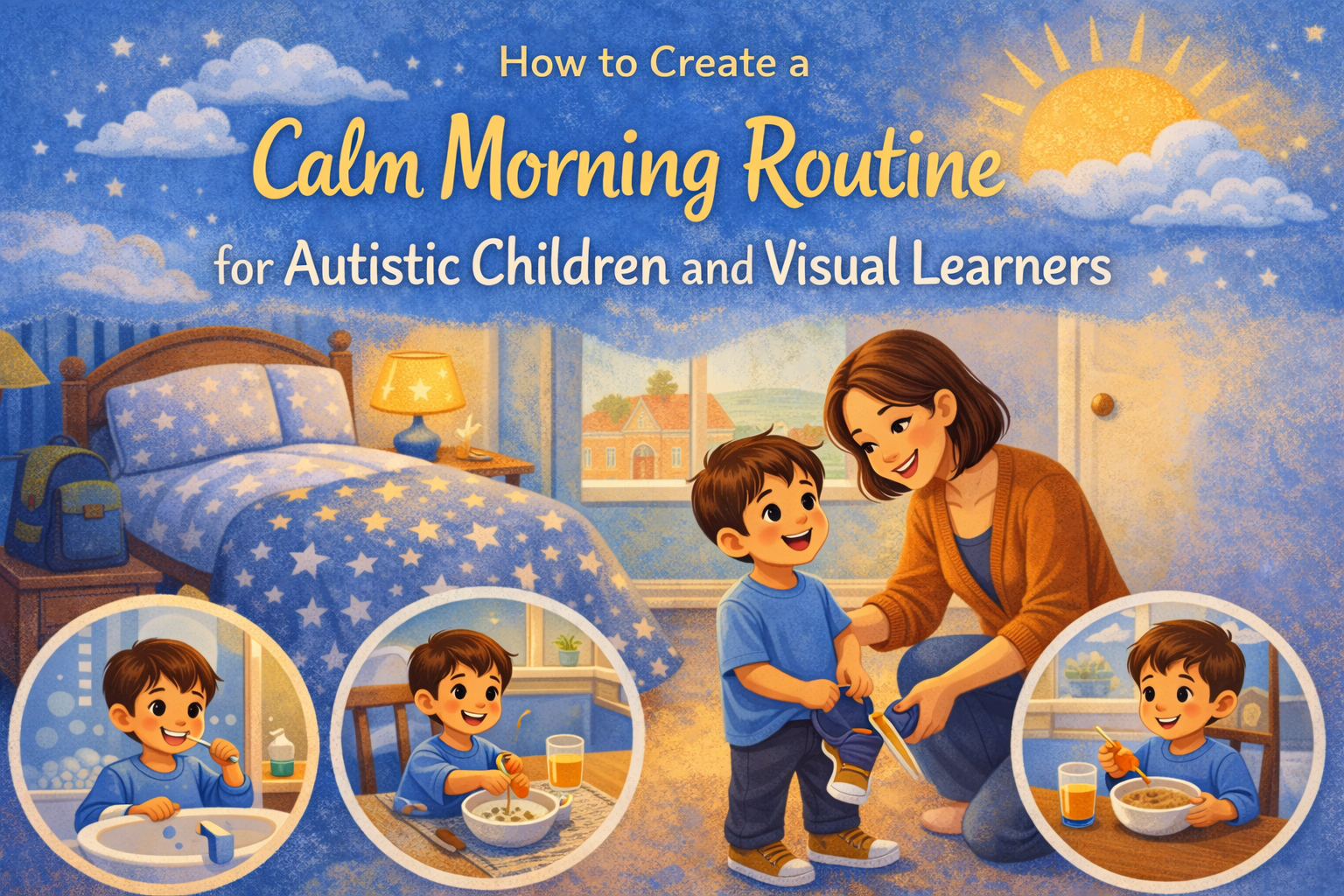
Morning routines often set the tone for the entire day. When mornings feel rushed or unpredictable, anxiety increases.
A structured sequence such as:
Get Dressed
Breakfast
Brush Teeth
Hair
Shoes
School
helps reduce resistance and improve independence.
👉 Explore our Morning Routine Visual Communication Tag Set.
2️⃣ Night Time Routine Tags
Evening transitions can be difficult, especially when winding down.
Night routine tags may include:
Bath
Pyjamas
Brush Teeth
Story
Bed
Predictability supports calmer bedtimes and improved sleep routines.
👉 Discover our Night Time Routine Visual Communication Tag Set.
3️⃣ Basic Needs Communication Tags
Routine and communication often overlap. When individuals cannot easily express needs, behaviour may escalate.
Tags such as:
Drink
Snack
Toilet
Help
Break
Quiet
support emotional regulation alongside daily structure.
👉 View our Basic Needs Communication Tag Set.
4️⃣ Communication & Regulation Tags
Some tags focus specifically on self-advocacy and sensory needs, such as:
Too Hot
Too Cold
Quiet
Break
These empower individuals to communicate discomfort before distress escalates.
👉 Browse our Communication & Regulation Tags.
How to Use Visual Routine Tags Effectively
Simply owning tags is not enough. Consistency matters.
Step 1: Keep It Simple
Start with 5–7 tags. Too many can feel overwhelming.
Step 2: Use Them Daily
Routine builds familiarity. Consistency increases confidence.
Step 3: Model the Process
Show how to use the tags. Point to them during transitions.
Step 4: Encourage Independence
Gradually allow the individual to select or show the next tag.
Step 5: Keep Them Portable
Attach them to a keyring or lanyard so they travel between settings.
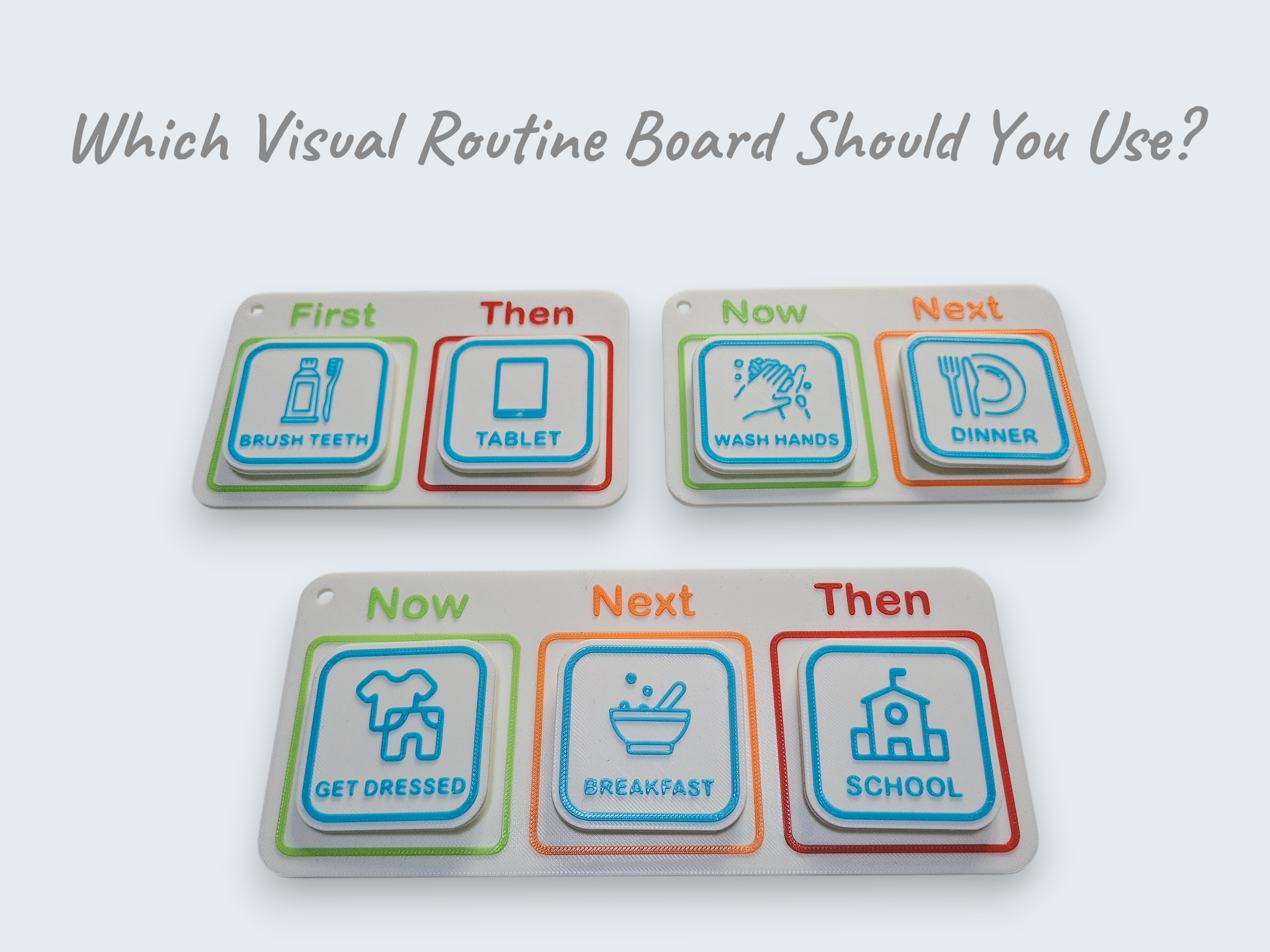
Visual Routine Tags vs Wall Charts
Wall charts are useful. However, they are static and location-bound.
Tag-based systems are:
Portable
Durable
Discreet
Flexible
Customisable
As a result, they adapt better to real-world environments.
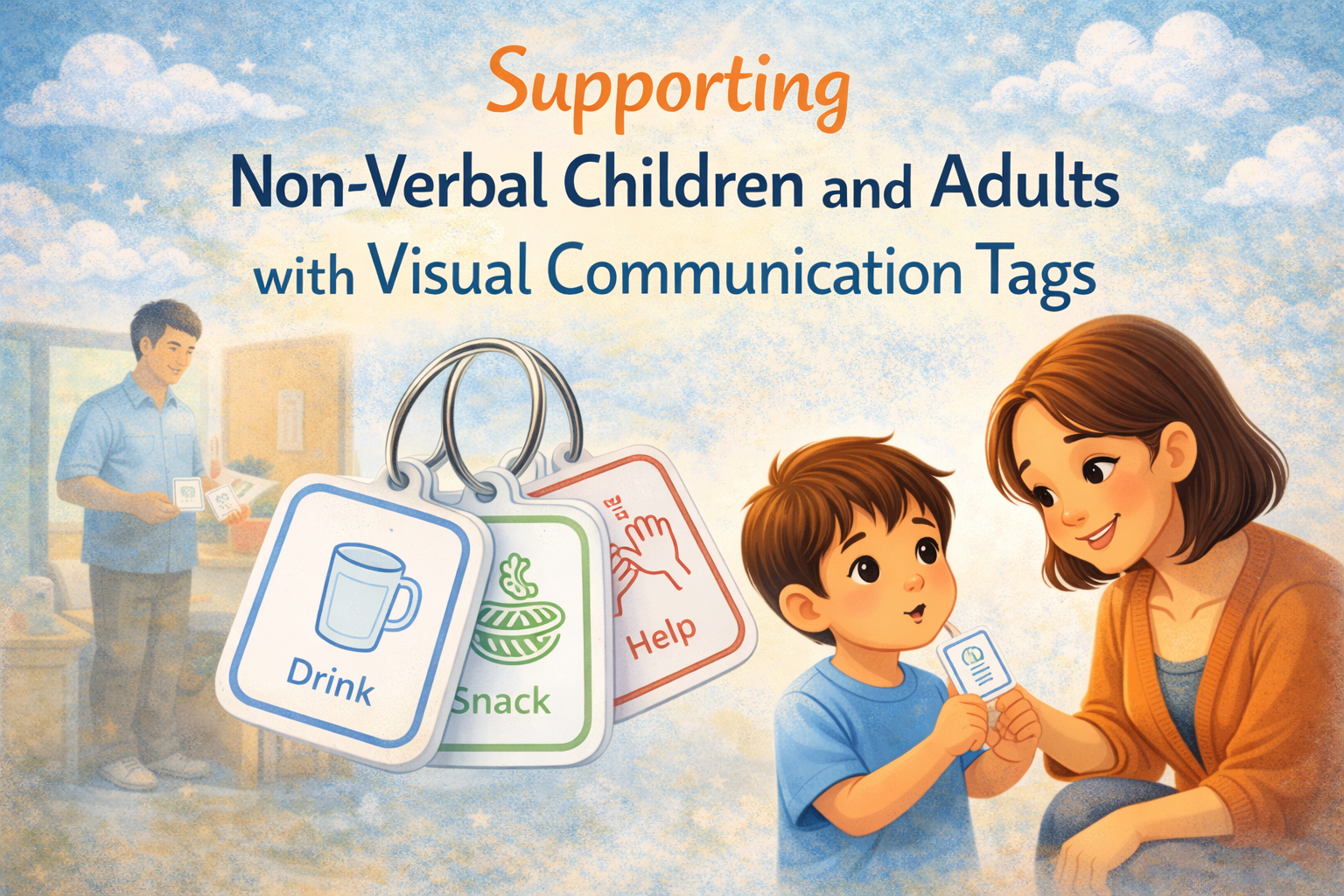
Supporting Non-Verbal Children and Adults
For non-verbal individuals, visual routine tags also act as communication tools.
They reduce frustration by:
Read more in our guide:
👉 Supporting Non-Verbal Children and Adults with Visual Communication Tags
Frequently Asked Questions
How many tags should I start with?
Begin with 5–7. Expand gradually once the system feels familiar.
Are visual routine tags only for children?
No. Many teenagers and adults benefit from structured visual supports.
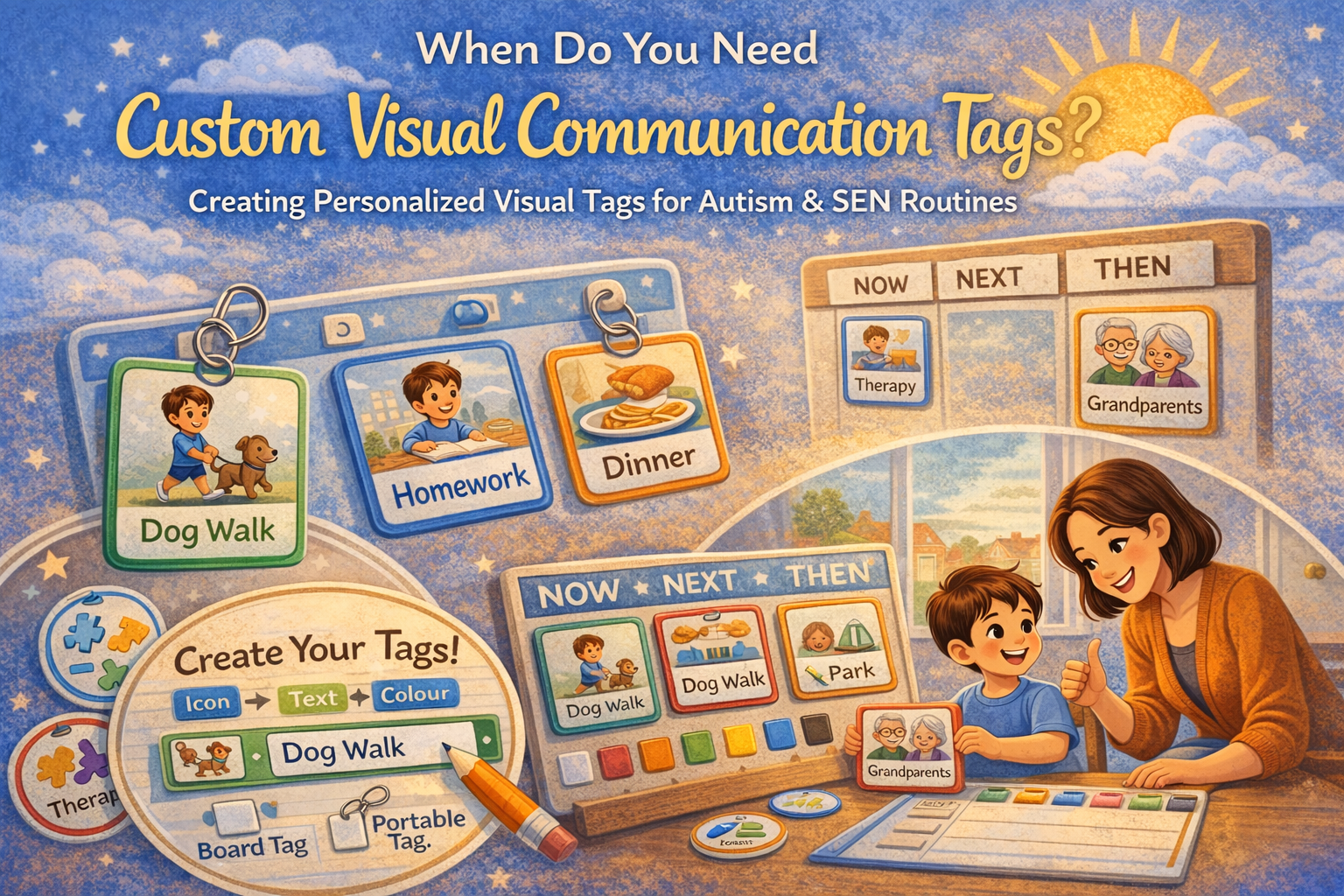
Can colours be customised?
Yes. Customisable colours support sensory preferences and colour-coding systems.
Do visual tags replace speech or AAC?
No. They complement existing communication methods.
Final Thoughts
Visual routine tags create clarity in a world that can often feel overwhelming. Whether supporting basic needs, emotional regulation or structured routines, they promote confidence and independence.
When routines are visible and portable, transitions become smoother and anxiety reduces.
Structure supports success.