Why Some Autistic Children Feel Too Hot or Too Cold
Many autistic children experience the world differently through their senses. While sound and light sensitivities are widely discussed, temperature sensitivity in autism is another common and often overlooked challenge.
For some children, feeling too hot or too cold is not a minor discomfort. It can quickly become overwhelming, distracting or distressing.
Understanding why this happens is the first step in providing the right support.
What Is Temperature Sensitivity?
Temperature sensitivity is linked to sensory processing differences. The nervous system may interpret heat or cold more intensely than expected, or struggle to regulate internal body awareness effectively.
An autistic child might:
-
Feel uncomfortably hot in a room others find comfortable
-
Become distressed by cold air or wet clothing
-
Struggle with transitions between environments (indoors to outdoors)
-
Have difficulty explaining physical discomfort
Because this discomfort may not be visible, it can sometimes be misunderstood as behaviour rather than sensory overload.
Why Temperature Can Trigger Overwhelm
When a child feels physically uncomfortable but cannot communicate it clearly, frustration builds. This can lead to:
-
Meltdowns
-
Withdrawal
-
Irritability
-
Refusal to participate
In reality, the root cause may simply be that they are too hot or too cold.
Clear communication tools can prevent escalation.
Supporting Temperature Sensitivity at Home and School
Practical strategies include:
-
Dressing in easy-to-adjust layers
-
Offering cooling or warming options proactively
-
Preparing children for environment changes
-
Creating predictable transitions
-
Using visual supports to communicate discomfort
For children who struggle to verbalise physical sensations, sensory communication tools can be especially helpful.
Using Visual Supports for Temperature Communication
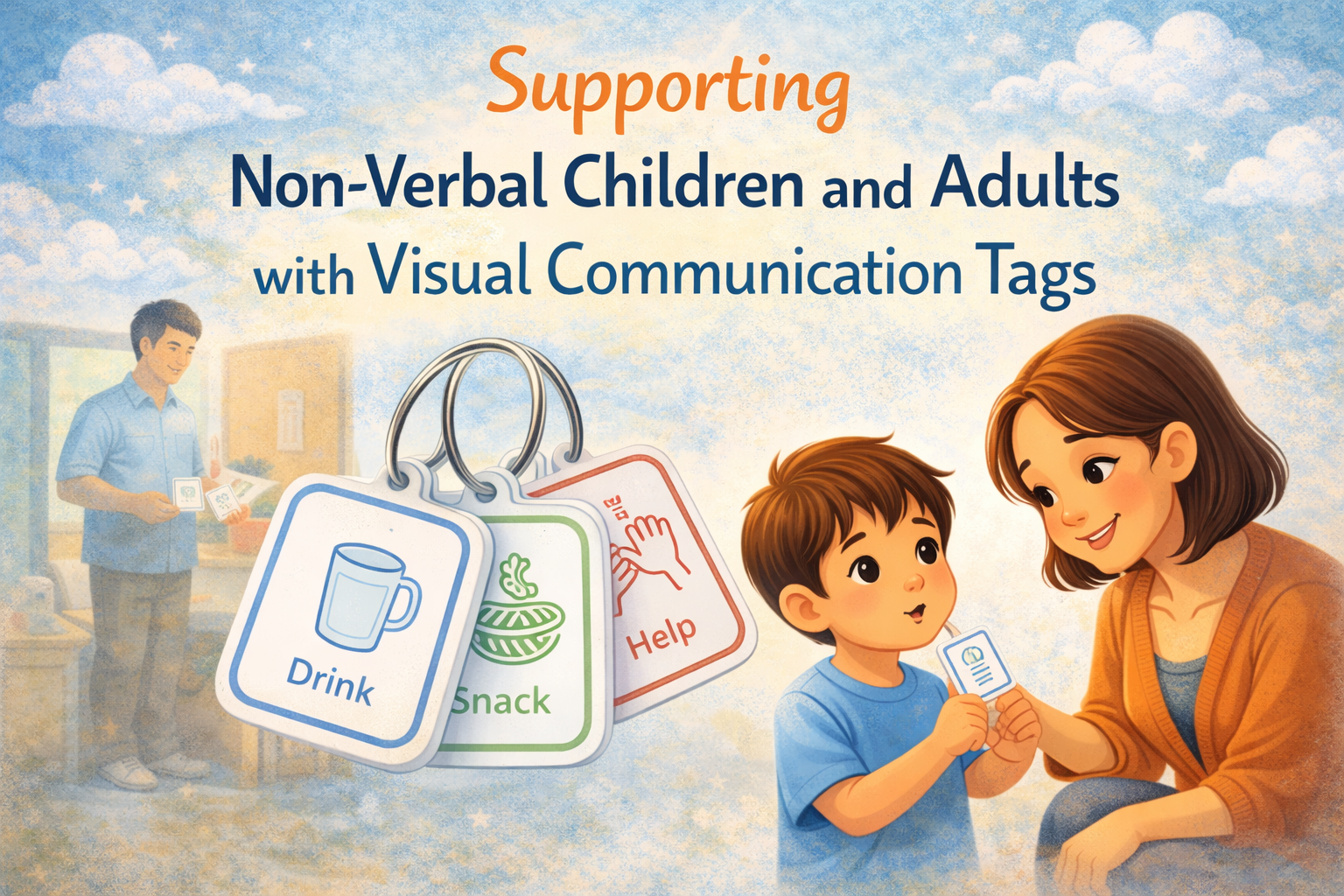
Visual supports allow children to indicate how they are feeling without needing complex explanations.
Simple visual cues such as “Too Hot” or “Too Cold” tags give children:
Our Too Hot / Too Cold Sensory Communication Tags were designed specifically to support this need, helping children communicate temperature discomfort quickly and confidently.
These tags work particularly well alongside broader emotion and regulation supports, creating a complete system for managing sensory and emotional needs.
Creating a Supportive Sensory Environment
Every autistic child experiences sensory input differently. What feels comfortable one day may feel overwhelming the next.
The goal is not to eliminate every discomfort — but to provide tools that help children recognise, communicate and regulate their needs safely.
By understanding temperature sensitivity in autism, parents and educators can reduce unnecessary stress and create environments that feel more predictable and supportive.
Supporting independence starts with understanding sensory needs.