First Then vs Now Next vs Now Next Then Boards: What’s the Difference?
First Then vs Now Next board tools are widely used to support autistic children and individuals with SEN. These visual communication boards help make routines clearer and reduce anxiety around transitions between activities.
Many parents and teachers hear terms like First Then boards, Now Next boards and Now Next Then boards, but it isn’t always obvious what the differences are.
Understanding the difference between a First Then vs Now Next board can help you choose the right visual support for your routine.
First Then Board
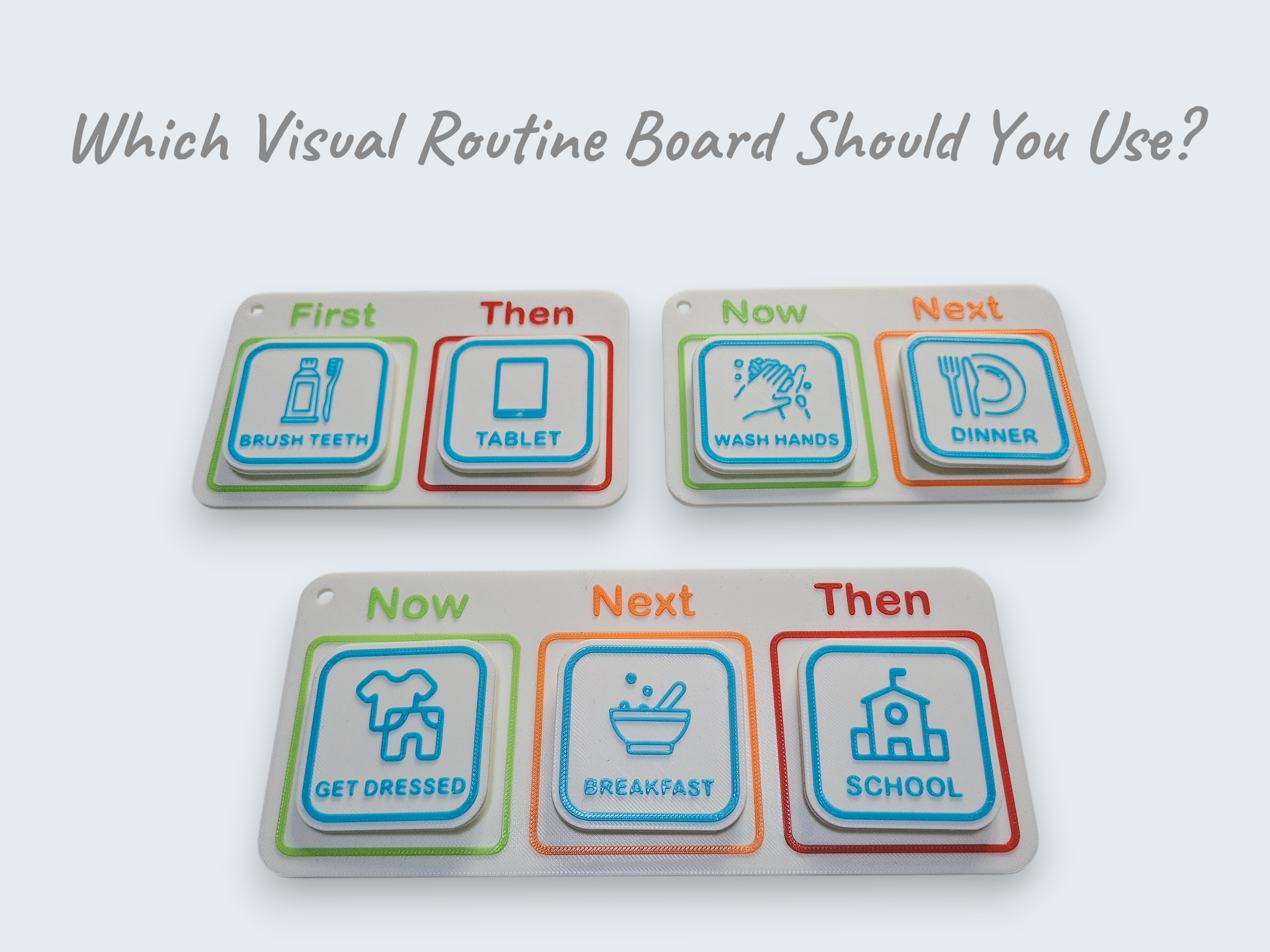
A First Then board is the simplest visual transition tool. It shows one task that needs to happen before another activity.
Structure:
Example:
First → Brush Teeth
Then → Bedtime Story
This board is often used to introduce a task followed by a preferred activity. It works well for younger children or individuals who benefit from very simple visual instructions.
Common uses include:
- encouraging task completion
- behaviour support
- introducing routines
Explore our First Then Board to see how this structure works.
Now Next Board
A Now Next board helps show what is happening in the present and what will happen afterwards.
Structure:
Example:
Now → Maths
Next → Break
This board helps individuals understand transitions during the day and can reduce anxiety about what is coming next.
Now Next boards are often used in classrooms and therapy settings.
Explore our Now Next Board to build simple visual routines.
Now Next Then Board
A Now Next Then board adds an extra step, allowing routines to be planned in sequence.
Structure:
Example:
Now → Homework
Next → Dinner
Then → Gaming
This structure is useful when planning slightly longer routines or helping individuals understand what will happen later in the day.
Explore our Now Next Then Board to create structured routines.
Which Visual Routine Board Should You Choose?
The best board depends on the level of structure needed.
| Board |
Best For |
| First Then |
simple routines and behaviour support |
| Now Next |
transitions between activities |
| Now Next Then |
structured daily routines |
Many families and classrooms use more than one board depending on the situation.
Using Visual Routine Tags
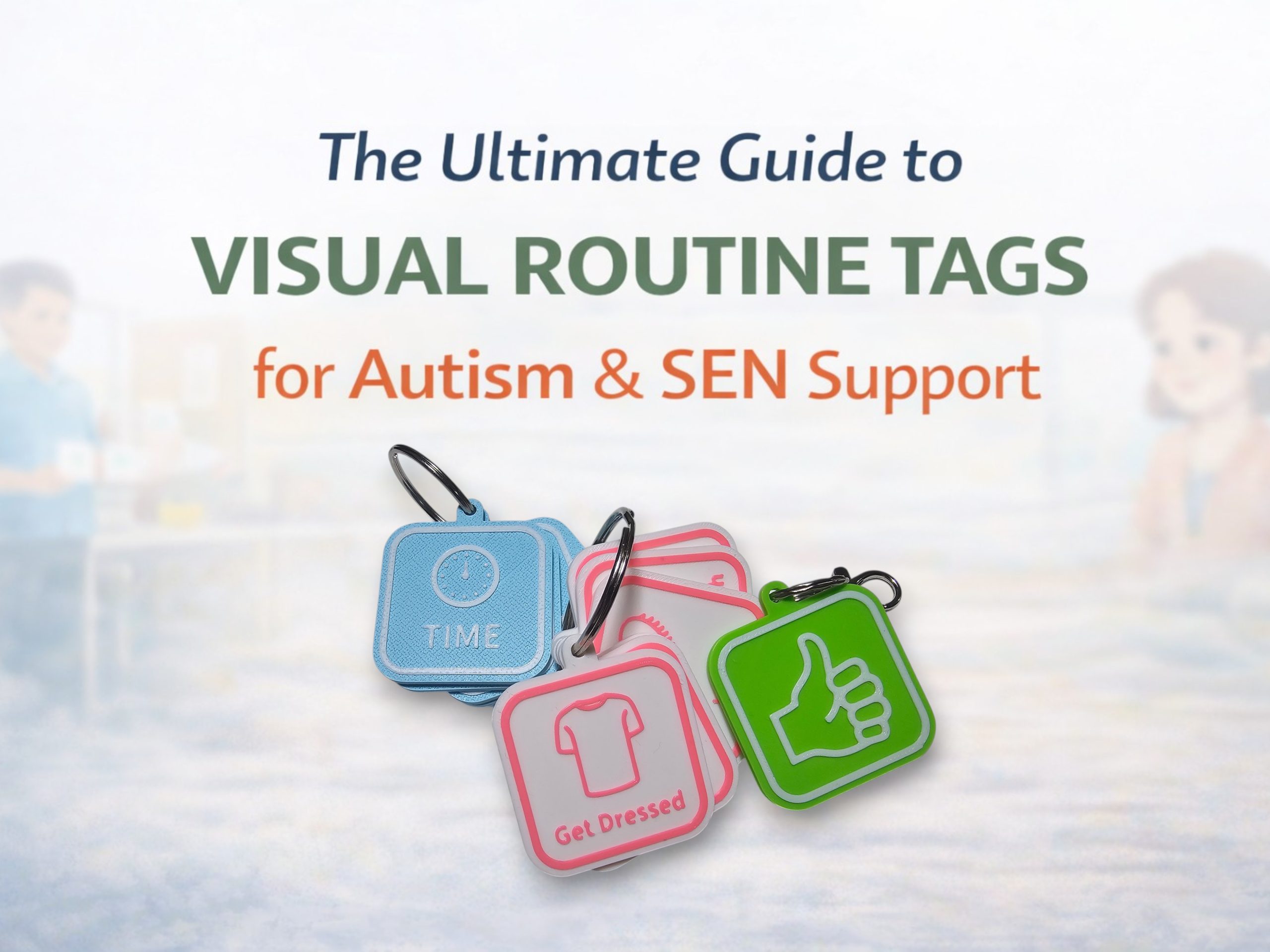
Visual communication boards work best when used with Visual Routine Tags. These tags represent activities such as:
- breakfast
- school
- homework
- outside
- dinner
By combining boards and tags, it becomes possible to build clear visual schedules that help make daily routines easier to understand.
First Then vs Now Next Board: Key Differences
Then add this text under it:
When comparing a First Then vs Now Next board, the difference comes down to how routines are structured.
A First Then board focuses on completing a task before a preferred activity, while a Now Next board shows the current activity and what will happen next.
Final Thoughts
Visual communication tools help turn spoken instructions into clear visual routines. By choosing the right board and adding visual tags, routines can become more predictable and easier to follow.
For many autistic children and individuals with SEN, this simple change can make everyday transitions much smoother.
When comparing a First Then vs Now Next ve Now Next Then boards, the main difference is how much of the routine is shown at once.
Visual communication boards are commonly used in autism support strategies and are recommended by organisations such as the National Autistic Society.