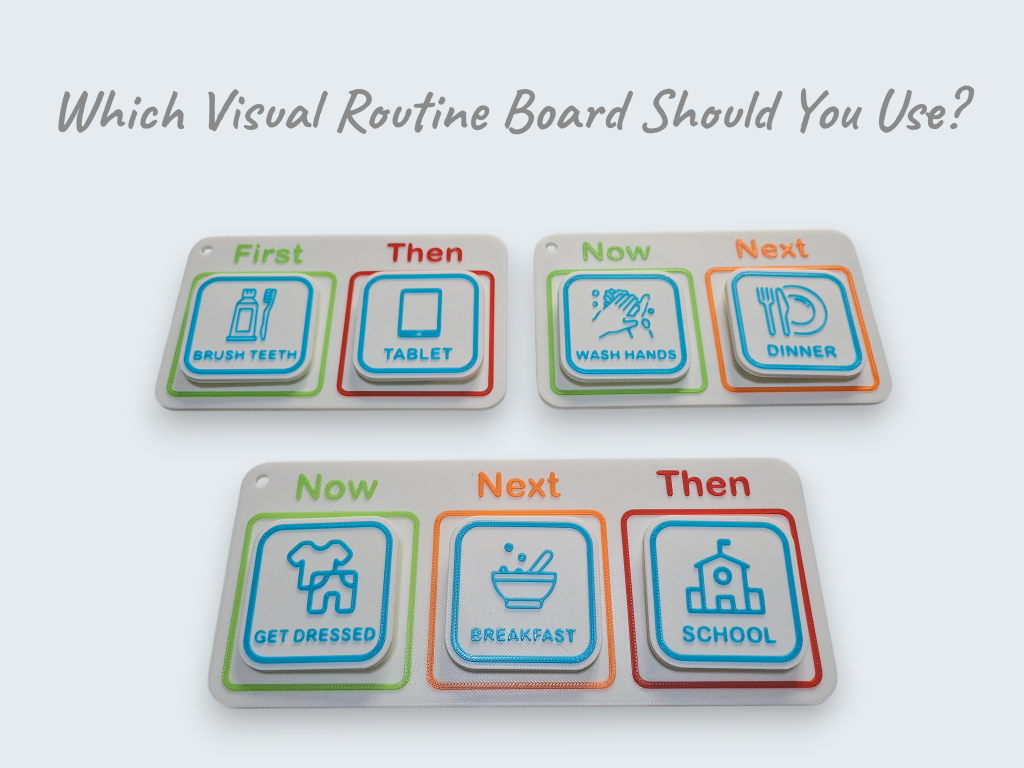
First Then vs Now Next vs Now Next Then Boards: What’s the Difference? First Then vs Now Next board tools are widely used to support autistic children and individuals with SEN. These visual communication boards help make routines clearer and reduce anxiety around transitions between activities. Many parents and teachers hear terms like First Then […]
Visual communication tools work best when they reflect real daily routines. While many activities can be covered with standard visual tags, some routines are unique to each individual, family, or setting. Custom visual communication tags allow you to create personalised visual cues that represent specific activities, routines, or needs. By matching the visuals to real […]
Visual routine tags are simple tools with powerful impact. For autistic individuals and those with additional needs, predictable structure reduces anxiety, supports communication and encourages independence. In this ultimate guide, we explain what visual routine tags are, how they work and how to use them effectively at home, school and in the community. What Are […]
Supporting Non-Verbal Children and Adults with Visual Communication Tags Communication is a fundamental human need. However, for non-verbal children and adults, expressing needs, emotions, and preferences can be challenging. Visual communication tags offer a simple, structured and portable way to support understanding and independence. Importantly, these tools are not just for children. They can be […]
A calm morning routine for autistic children and visual learners. Mornings can feel rushed, unpredictable and overwhelming. For autistic children and visual learners, this unpredictability can quickly lead to stress and resistance. However, with the right structure, mornings can become calmer and far more independent. Why Mornings Can Be Difficult Transitions are often the hardest […]
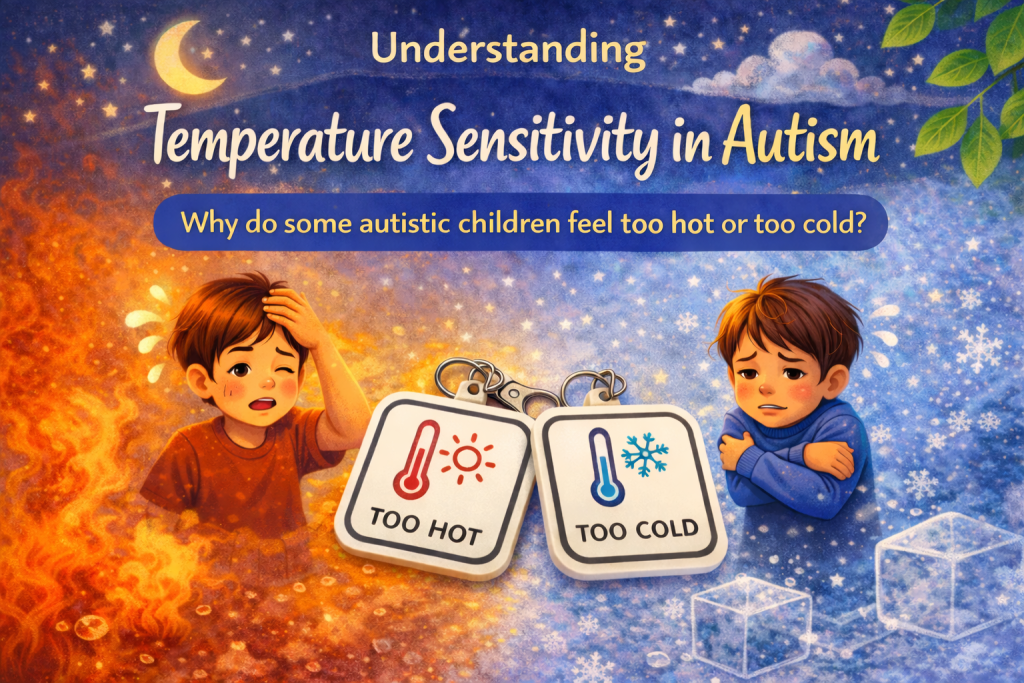
Why Some Autistic Children Feel Too Hot or Too Cold Many autistic children experience the world differently through their senses. While sound and light sensitivities are widely discussed, temperature sensitivity in autism is another common and often overlooked challenge. For some children, feeling too hot or too cold is not a minor discomfort. It can […]
Establishing a consistent night time routine for children can transform evenings from stressful to structured. For many families — particularly those supporting children with autism, ADHD or sensory differences — bedtime transitions can feel overwhelming. A predictable routine reduces anxiety and builds confidence by showing children exactly what happens next. Why Night Time Routines Matter […]
►
Necessary cookies enable essential site features like secure log-ins and consent preference adjustments. They do not store personal data.
None
►
Functional cookies support features like content sharing on social media, collecting feedback, and enabling third-party tools.
None
►
Analytical cookies track visitor interactions, providing insights on metrics like visitor count, bounce rate, and traffic sources.
None
►
Advertisement cookies deliver personalized ads based on your previous visits and analyze the effectiveness of ad campaigns.
None
►
Unclassified cookies are cookies that we are in the process of classifying, together with the providers of individual cookies.